Wireless Construction Built for Execution
Reduce delays across site builds, upgrades, and decommissioning. Maintain site readiness, coordination, and closeout discipline without adding operational drag.

Wireless deployments don’t break in planning. They break in the field. Coordination gaps lead to idle crew and slow site closeouts delay activation. Delays at one site ripple across the entire deployment schedule.
You need execution that anticipates constraints before crews mobilize and maintains alignment through every phase.
Schedules hold when execution accounts for:
As wireless construction scales across markets, maintaining oversight becomes more difficult. Large firms add layers that slow decisions. Smaller firms struggle to scale across markets. You need both speed and control.
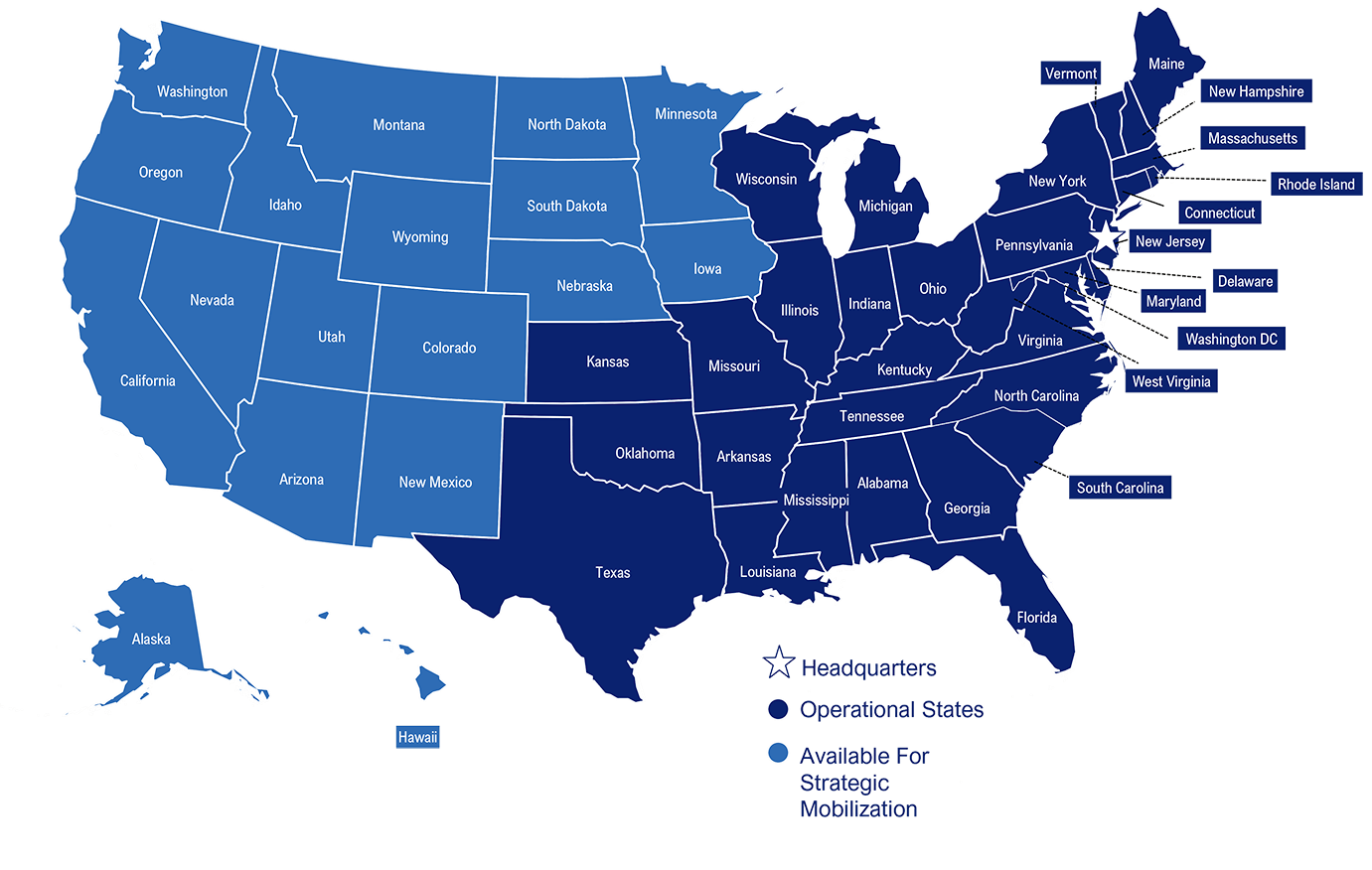
In the past three years, SQUAN has mobilized 18 deployment centers to support multi-market programs while also standing up temporary laydown yards and job-site logistics to match the speed and duration of individual tower builds.
Field partners operate within SQUAN’s systems and adhere to defined safety, quality assurance, and closeout processes, ensuring consistent execution across sites regardless of location or scope.
Site builds and modifications happen under active network demand. Teams operate under time pressure that affects delivery. Network requirements can change mid-project.
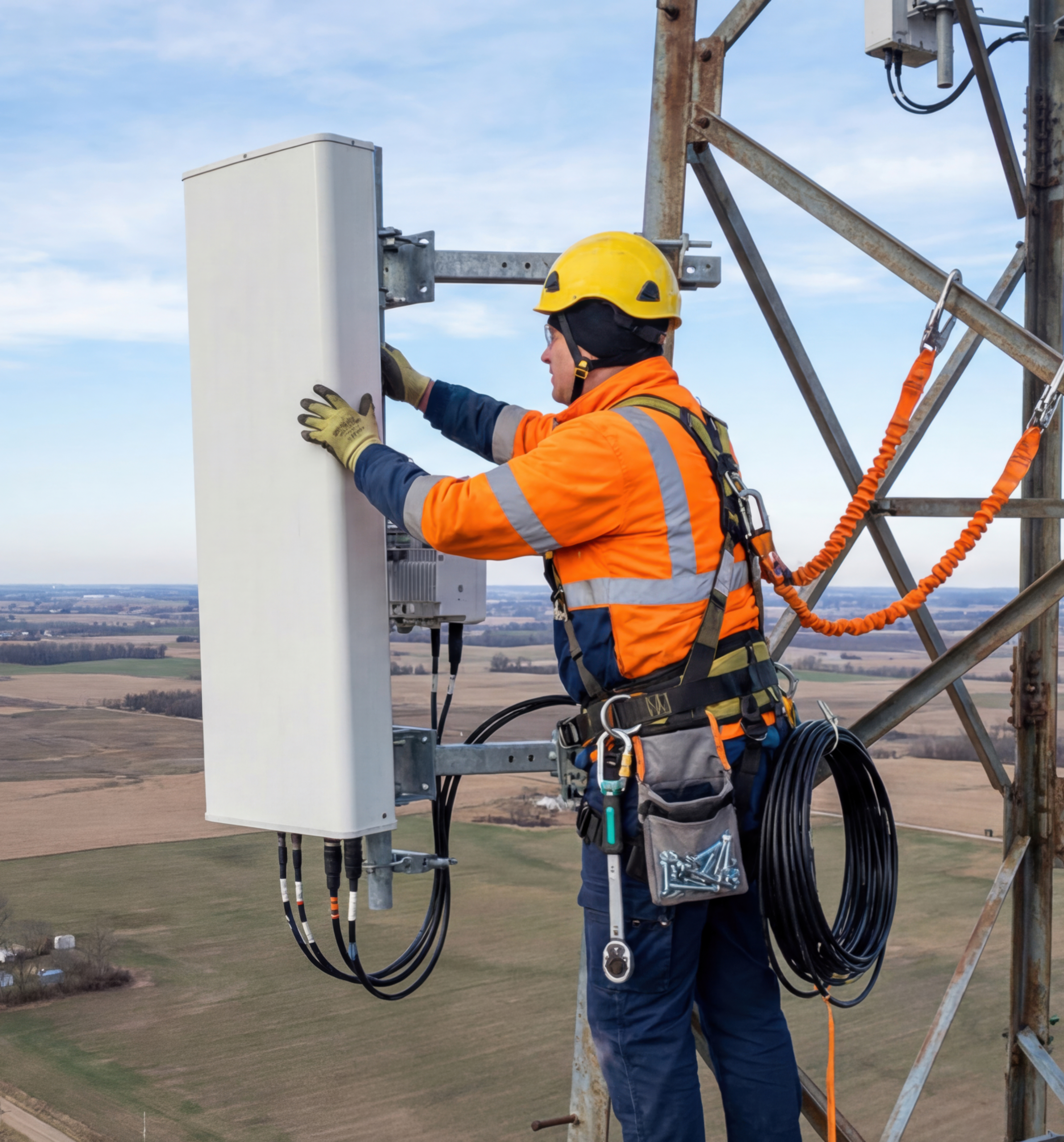
You need crews that integrate into deployment schedules, meet standards without rework, and keep pace with changing demands.
Maintaining schedule integrity requires:Builds move forward without disrupting network performance.
You're not just taking down equipment. You're managing risk on a live network where poor sequencing interrupts service, incomplete removal triggers violations, and a stalled decommission holds up the next build waiting on that spectrum.
When the stakes are that high, you need a partner who's already worked through every failure point, so you don't have to:
Decommissioning stops being a liability and starts being a line item.
Small cell and in-building work is where programs quietly stall. Jurisdictions are fragmented, property owners require hands-on coordination, and a permitting conflict that would slow a macro site can stop a dense deployment cold. You need site selection validated in the field before plans are committed, not flagged after crews are already scheduled. Here's what that looks like in practice:
Stay Connected with Us


SQUAN CONSTRUCTION SERVICES | 193 Veterans Boulevard • Carlstadt, NJ 07072 | 201.408.5111 | © Copyright 2025. All Rights Reserved.